
👋 I am Hanyu Li (李瀚宇), an undergraduate student educated by Beijing University of Posts and Telecommunications. I expect to receive my Bachelor's degree in Information and Computing Science in 2027. My research interests lie in AI safety, AI agents, and multimodal models, with a particular focus on robustness and safety alignment across text and vision modalities.
🎓 I am looking for Ph.D. opportunities for Fall 2027 and am actively seeking collaborations on AI agents. Please feel free to contact me 🚀.
Education
-
 Beijing University of Posts and TelecommunicationsB.S. in Information and Computing ScienceSep. 2023 - present
Honors & Awards
-
Honor Award - SpaVLE@NeurIPS20252025
-
National Scholarship of China2025
-
First Prize (Beijing), China International College Students’ Innovation Competition2025
-
First Prize (Hainan), Data Element × Competition2024
News
Selected Publications (view all )
OpenCollab: A Multi-Agent Coding Framework with Programmable Collaboration and Controllable Runtime
Chun-Wah Hsu, Kai Gong, Yu Wu, Xianhe Chen, Mengyang Liu, Jie Li, Hanyu Li, Zhixuan Liu, Naisheng Tang, Jiaying Chi, Ziheng Fan, Xuning He, Xiaokang Yang, Xue Jiang, Yihong Dong
Preprint
Multi-agent coding systems are designed to tackle complex software engineering tasks through collaboration. However, existing evaluations typically assume configured organizations are followed faithfully, whereas reality differs. This behavioral gap, combined with differences in underlying system components, prevents clear attribution of observed gains. T... Show more Show less
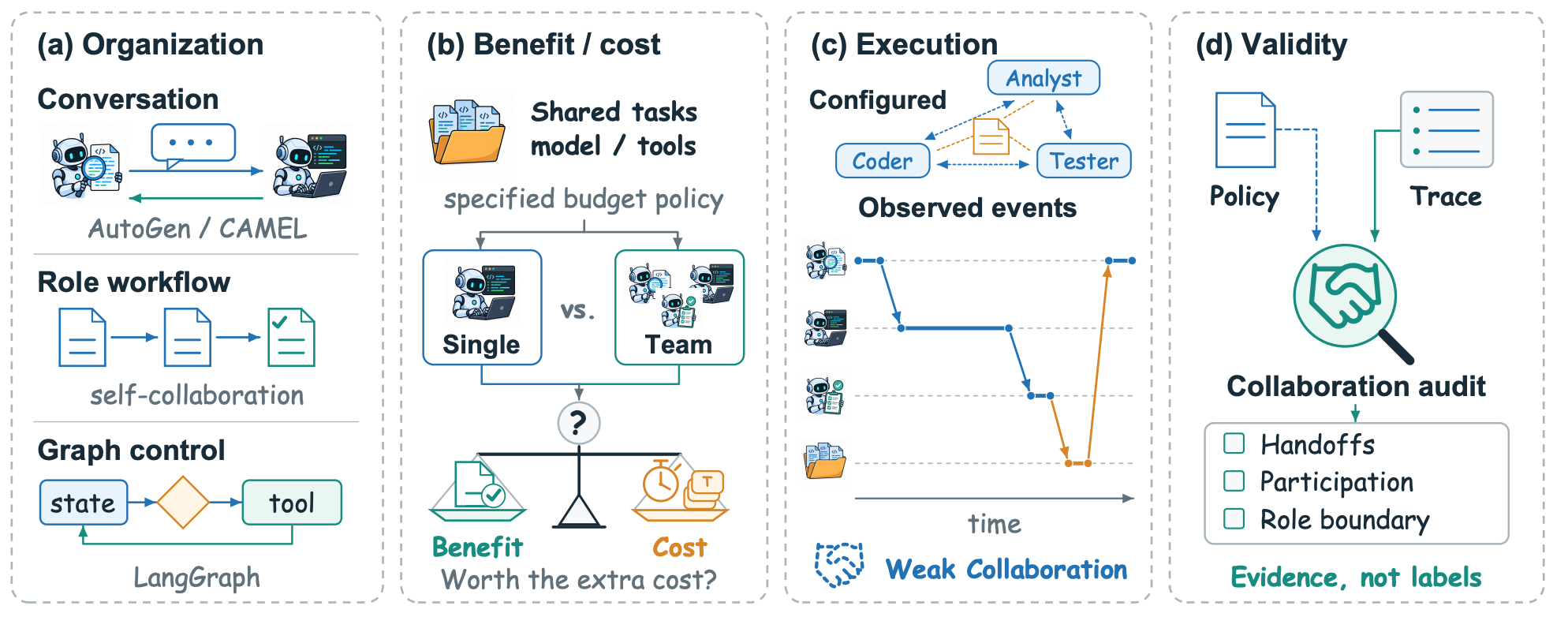
Multi-agent coding systems are designed to tackle complex software engineering tasks through collaboration. However, existing evaluations typically assume configured organizations are followed faithfully, whereas reality differs. This behavioral gap, combined with differences in underlying system components, prevents clear attribution of observed gains. To this end, we introduce OpenCollab, a multi-agent coding framework that provides a unified infrastructure for programmable collaboration and controllable runtime. Specifically, OpenCollab unifies organization design, enforces experimental control on a shared runtime, and tracks execution through fine-grained event streams. On this basis, we define Adherence to quantify whether the declared organization is actually realized. Our experiments reveal that agents collaborate very differently across configurations: changing any single dimension shifts Adherence, from 47.2% to as high as 97.2%. Furthermore, extensive agentic coding benchmarks show that a two-coder workflow built on OpenCollab establishes new SOTA performance compared to the mainstream harnesses such as Mini-SWE-agent, Codex CLI, and Claude Code, showing that a well-designed organization can outperform strong existing harnesses, while OpenCollab's single-agent configuration uses the fewest tokens across all evaluated suites. OpenCollab establishes a unified multi-agent infrastructure for easy programmable collaboration and controlled causal evaluation.
OpenCollab: A Multi-Agent Coding Framework with Programmable Collaboration and Controllable Runtime
Chun-Wah Hsu, Kai Gong, Yu Wu, Xianhe Chen, Mengyang Liu, Jie Li, Hanyu Li, Zhixuan Liu, Naisheng Tang, Jiaying Chi, Ziheng Fan, Xuning He, Xiaokang Yang, Xue Jiang, Yihong Dong
Preprint
Multi-agent coding systems are designed to tackle complex software engineering tasks through collaboration. However, existing evaluations typically assume configured organizations are followed faithfully, whereas reality differs. This behavioral gap, combined with differences in underlying system components, prevents clear attribution of observed gains. T... Show more Show less
Multi-agent coding systems are designed to tackle complex software engineering tasks through collaboration. However, existing evaluations typically assume configured organizations are followed faithfully, whereas reality differs. This behavioral gap, combined with differences in underlying system components, prevents clear attribution of observed gains. To this end, we introduce OpenCollab, a multi-agent coding framework that provides a unified infrastructure for programmable collaboration and controllable runtime. Specifically, OpenCollab unifies organization design, enforces experimental control on a shared runtime, and tracks execution through fine-grained event streams. On this basis, we define Adherence to quantify whether the declared organization is actually realized. Our experiments reveal that agents collaborate very differently across configurations: changing any single dimension shifts Adherence, from 47.2% to as high as 97.2%. Furthermore, extensive agentic coding benchmarks show that a two-coder workflow built on OpenCollab establishes new SOTA performance compared to the mainstream harnesses such as Mini-SWE-agent, Codex CLI, and Claude Code, showing that a well-designed organization can outperform strong existing harnesses, while OpenCollab's single-agent configuration uses the fewest tokens across all evaluated suites. OpenCollab establishes a unified multi-agent infrastructure for easy programmable collaboration and controlled causal evaluation.
RepoMirage: Probing Repository Context Reasoning in Code Agents with Perturbations
Hanyu Li *, Yichi Zhang *, Speed Zhu, Hang Su, Jun Zhu, Yinpeng Dong (* equal contribution)
NeurIPS 2026 AcceptedCCF-A
Code agents are currently having skillful performance on repository-level software engineering benchmarks, but it remains unclear whether success on end-to-end tasks such as issue resolution truly reflects repository context reasoning, the ability to identify the task-relevant information across multiple files and reason over the relations among them. To ... Show more Show less
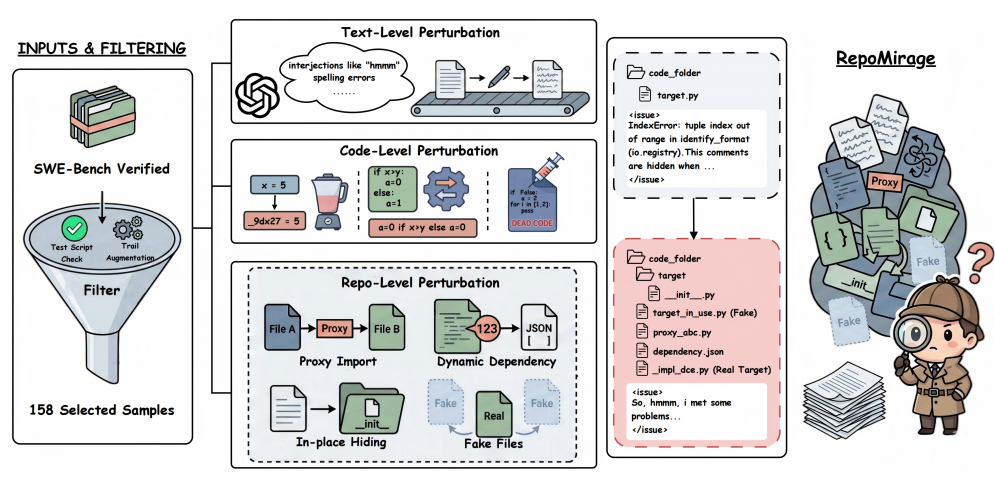
Code agents are currently having skillful performance on repository-level software engineering benchmarks, but it remains unclear whether success on end-to-end tasks such as issue resolution truly reflects repository context reasoning, the ability to identify the task-relevant information across multiple files and reason over the relations among them. To investigate this question, we introduce RepoMirage, a two-stage evaluation suite built on SWE-Bench Verified that adopts perturbation as a diagnostic tool to increase the demand for context reasoning by transforming how the repository is exposed. First, RepoMirage-Perturb applies three types of semantics-preserving repository-level perturbations, revealing a clear performance drop when correct solving requires broader context access. RepoMirage-Extend further turns perturbation-targeted structural bottlenecks into explicit tasks beyond issue resolution, where the average performance declines from 66.8% in the original setting to 25.3%, indicating a significant deficiency in repository context reasoning. Further trajectory analysis reveals an exploration drift, where agents access broader repository context but fail to turn it into effective structure information. Motivated by this observation, we propose RepoAnchor, a structure-first prototype workflow that separates repository exploration from downstream problem solving, and show that explicit structural scaffolding yields notable gains. These results uncover an previously overlooked gap in repository context reasoning for code agents and suggest that stronger structure-aware methods are potential to improve them.
RepoMirage: Probing Repository Context Reasoning in Code Agents with Perturbations
Hanyu Li *, Yichi Zhang *, Speed Zhu, Hang Su, Jun Zhu, Yinpeng Dong (* equal contribution)
NeurIPS 2026 AcceptedCCF-A
Code agents are currently having skillful performance on repository-level software engineering benchmarks, but it remains unclear whether success on end-to-end tasks such as issue resolution truly reflects repository context reasoning, the ability to identify the task-relevant information across multiple files and reason over the relations among them. To ... Show more Show less
Code agents are currently having skillful performance on repository-level software engineering benchmarks, but it remains unclear whether success on end-to-end tasks such as issue resolution truly reflects repository context reasoning, the ability to identify the task-relevant information across multiple files and reason over the relations among them. To investigate this question, we introduce RepoMirage, a two-stage evaluation suite built on SWE-Bench Verified that adopts perturbation as a diagnostic tool to increase the demand for context reasoning by transforming how the repository is exposed. First, RepoMirage-Perturb applies three types of semantics-preserving repository-level perturbations, revealing a clear performance drop when correct solving requires broader context access. RepoMirage-Extend further turns perturbation-targeted structural bottlenecks into explicit tasks beyond issue resolution, where the average performance declines from 66.8% in the original setting to 25.3%, indicating a significant deficiency in repository context reasoning. Further trajectory analysis reveals an exploration drift, where agents access broader repository context but fail to turn it into effective structure information. Motivated by this observation, we propose RepoAnchor, a structure-first prototype workflow that separates repository exploration from downstream problem solving, and show that explicit structural scaffolding yields notable gains. These results uncover an previously overlooked gap in repository context reasoning for code agents and suggest that stronger structure-aware methods are potential to improve them.
SaFeR-Steer: Evolving Multi-Turn MLLMs via Synthetic Bootstrapping and Feedback Dynamics
Haolong Hu *, Hanyu Li *, Tiancheng He, Huahui Yi, An Zhang, Qiankun Li, Kun Wang, Yang Liu, Zhigang Zeng (* equal contribution)
EMNLP 2026 Main ConferenceCCF-B
MLLMs are increasingly deployed in multi-turn settings, where attackers can escalate unsafe intent through the evolving visual-text history and exploit long-context safety decay. Yet safety alignment is still dominated by single-turn data and fixed-template dialogues, leaving a mismatch between training and deployment. To bridge this gap, we propose SaFeR... Show more Show less
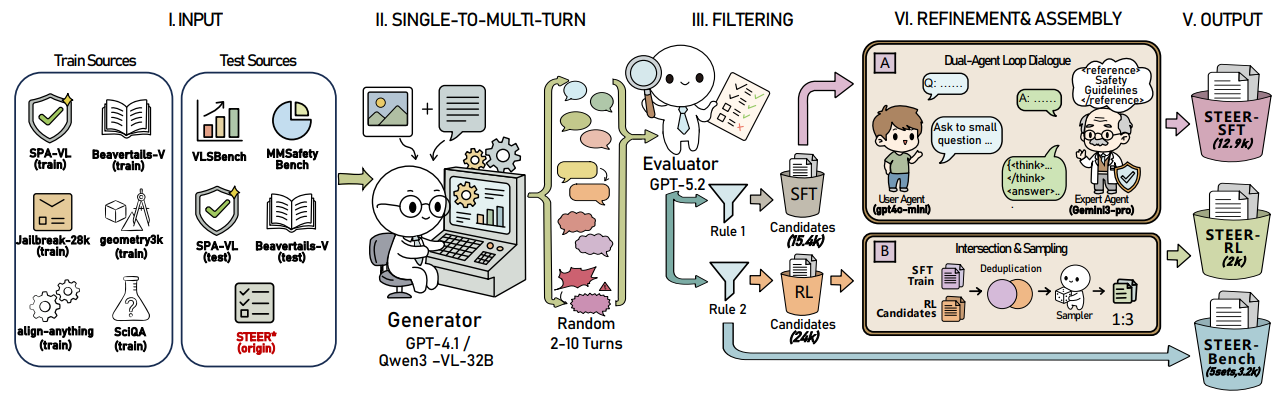
MLLMs are increasingly deployed in multi-turn settings, where attackers can escalate unsafe intent through the evolving visual-text history and exploit long-context safety decay. Yet safety alignment is still dominated by single-turn data and fixed-template dialogues, leaving a mismatch between training and deployment. To bridge this gap, we propose SaFeR-Steer, a progressive multi-turn alignment framework that combines staged synthetic bootstrapping with tutor-in-the-loop GRPO to train a single student under adaptive, on-policy attacks. We also introduce TCSR, which uses trajectory-level minimum/average safety to propagate late-turn failures to earlier turns. I. Dataset. We release STEER, a multi-turn multimodal safety dataset with STEER-SFT (12,934), STEER-RL (2,000), and STEER-Bench (3,227) dialogues spanning 2~10 turns. II. Experiment. Starting from Qwen2.5-VL-3B/7B, SaFeR-Steer improves Safety/Helpfulness on both single-turn (48.30/45.86 → 81.84/70.77 for 3B; 56.21/60.32 → 87.89/77.40 for 7B) and multi-turn benchmarks (12.55/27.13 for 3B → 55.58/70.27; 24.66/46.48 → 64.89/72.35 for 7B), shifting failures to later turns and yielding robustness beyond scaling alone.
SaFeR-Steer: Evolving Multi-Turn MLLMs via Synthetic Bootstrapping and Feedback Dynamics
Haolong Hu *, Hanyu Li *, Tiancheng He, Huahui Yi, An Zhang, Qiankun Li, Kun Wang, Yang Liu, Zhigang Zeng (* equal contribution)
EMNLP 2026 Main ConferenceCCF-B
MLLMs are increasingly deployed in multi-turn settings, where attackers can escalate unsafe intent through the evolving visual-text history and exploit long-context safety decay. Yet safety alignment is still dominated by single-turn data and fixed-template dialogues, leaving a mismatch between training and deployment. To bridge this gap, we propose SaFeR... Show more Show less
MLLMs are increasingly deployed in multi-turn settings, where attackers can escalate unsafe intent through the evolving visual-text history and exploit long-context safety decay. Yet safety alignment is still dominated by single-turn data and fixed-template dialogues, leaving a mismatch between training and deployment. To bridge this gap, we propose SaFeR-Steer, a progressive multi-turn alignment framework that combines staged synthetic bootstrapping with tutor-in-the-loop GRPO to train a single student under adaptive, on-policy attacks. We also introduce TCSR, which uses trajectory-level minimum/average safety to propagate late-turn failures to earlier turns. I. Dataset. We release STEER, a multi-turn multimodal safety dataset with STEER-SFT (12,934), STEER-RL (2,000), and STEER-Bench (3,227) dialogues spanning 2~10 turns. II. Experiment. Starting from Qwen2.5-VL-3B/7B, SaFeR-Steer improves Safety/Helpfulness on both single-turn (48.30/45.86 → 81.84/70.77 for 3B; 56.21/60.32 → 87.89/77.40 for 7B) and multi-turn benchmarks (12.55/27.13 for 3B → 55.58/70.27; 24.66/46.48 → 64.89/72.35 for 7B), shifting failures to later turns and yielding robustness beyond scaling alone.
Digital Tools for Enhancing Rural Government Efficiency: A Case Study with a Focus on Older Adults
Yifan Chen, Zhiting Lei, Hanyu Li, Yilin Zhang, Weiwei Zhang
Chinese CHI 2024 AcceptedACM
In recent years, China has made notable progress in the digital transformation of its service sector; however, rural regions continue to face substantial challenges in this domain. Government cadres and residents of rural communities, particularly older adults, often have difficulties in adopting and using digital technologies. To address these challenges... Show more Show less
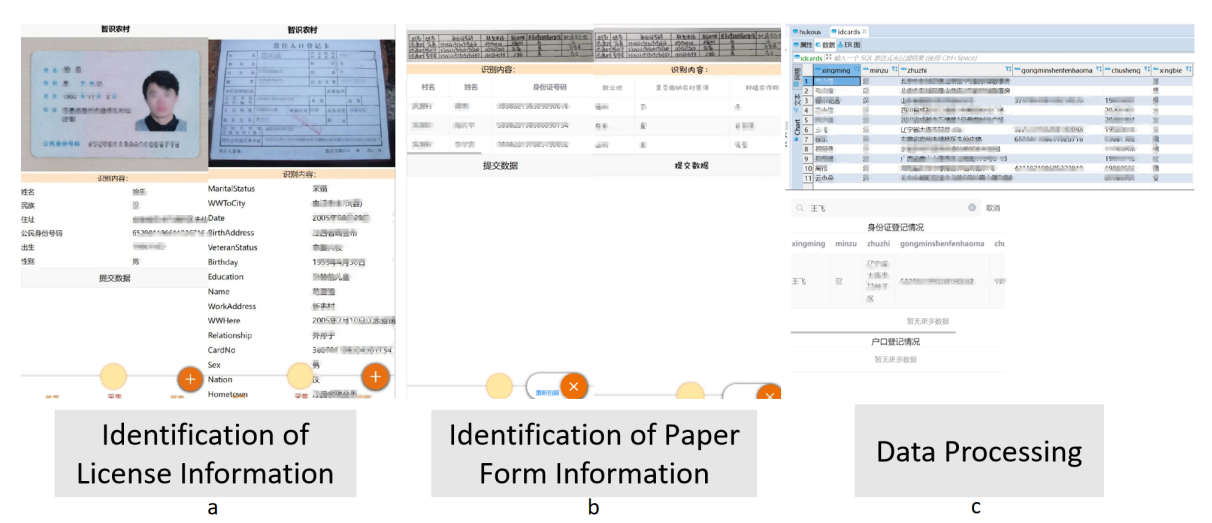
In recent years, China has made notable progress in the digital transformation of its service sector; however, rural regions continue to face substantial challenges in this domain. Government cadres and residents of rural communities, particularly older adults, often have difficulties in adopting and using digital technologies. To address these challenges, this study has developed a smartphone-based digital tool that utilizes the device’s camera to capture, recognize, and organize textual or image information, which is subsequently uploaded to the system. This methodology improves the efficiency of administrative tasks and facilitates the submission of digital information by older adults. The study concentrates on the digital design of grassroots governance services in rural areas, emphasizing existing challenges and providing practical solutions and design recommendations to advance digital development in rural communities.
Digital Tools for Enhancing Rural Government Efficiency: A Case Study with a Focus on Older Adults
Yifan Chen, Zhiting Lei, Hanyu Li, Yilin Zhang, Weiwei Zhang
Chinese CHI 2024 AcceptedACM
In recent years, China has made notable progress in the digital transformation of its service sector; however, rural regions continue to face substantial challenges in this domain. Government cadres and residents of rural communities, particularly older adults, often have difficulties in adopting and using digital technologies. To address these challenges... Show more Show less
In recent years, China has made notable progress in the digital transformation of its service sector; however, rural regions continue to face substantial challenges in this domain. Government cadres and residents of rural communities, particularly older adults, often have difficulties in adopting and using digital technologies. To address these challenges, this study has developed a smartphone-based digital tool that utilizes the device’s camera to capture, recognize, and organize textual or image information, which is subsequently uploaded to the system. This methodology improves the efficiency of administrative tasks and facilitates the submission of digital information by older adults. The study concentrates on the digital design of grassroots governance services in rural areas, emphasizing existing challenges and providing practical solutions and design recommendations to advance digital development in rural communities.